Many of print and mail teams are trying to solve the wrong problem. They think they need better composition, a better inserter dashboard, a cleaner handoff to postal software, or another reporting tool layered on top of the mess.
Usually, that is not the real issue.
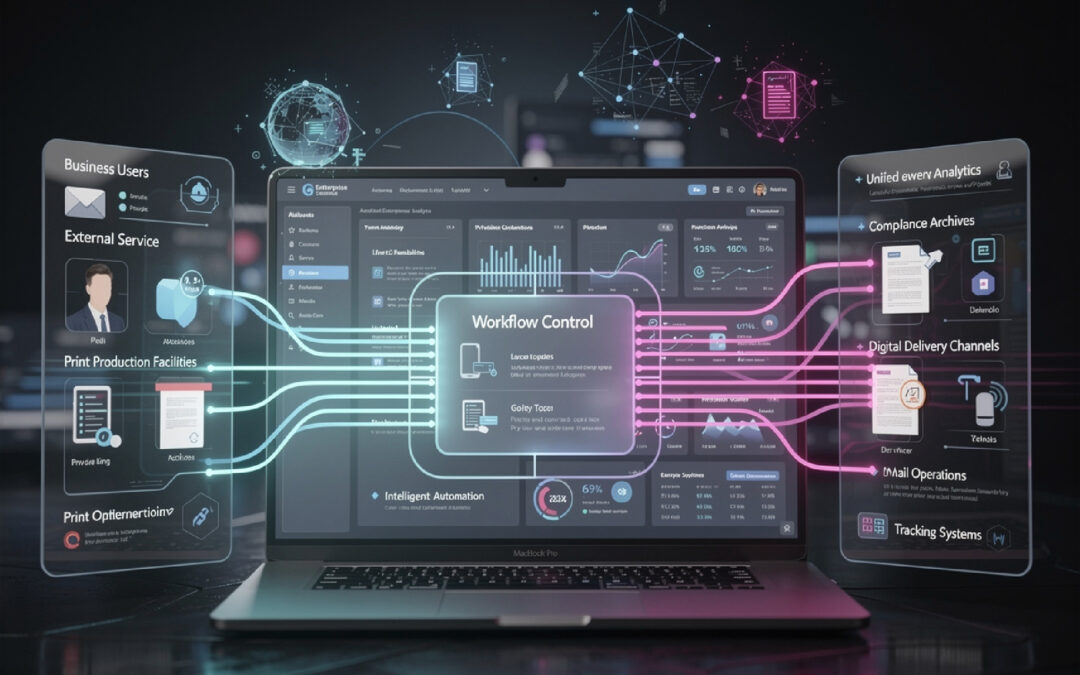
The real issue is that the operation has NO CONTROL LAYER. No central point of coordination. No place where jobs can be ingested, evaluated, transformed, routed, tracked, archived, and exposed to the rest of the business without leaning on ten disconnected tools and a handful of people who “just know how it works.” That is the gap that too many organizations are still living with, and it is why the conversation around customer communications is changing.
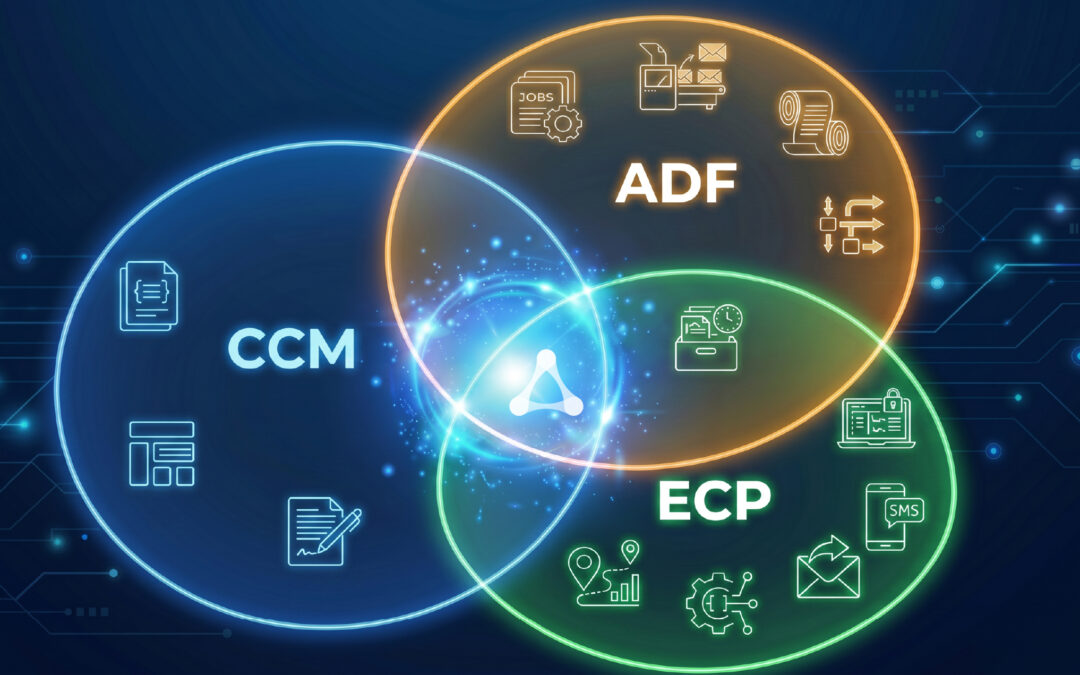
For years, a lot of the market revolved around CCM. That made sense. Composition matters. You cannot send what you cannot create. But once the document exists, a different set of problems shows up. The operation has to decide what happens next. Does the file need to be re-engineered? Batched? Suppressed? Split? Re-routed? Archived? Converted for digital presentment? Sent to a portal? Fed into a CRM? Held for compliance timing? Tracked at the job level? At the piece level?
That is not just composition anymore. That is operations.
The problem is not document creation. It is what happens after.
This is where many teams still get stuck.
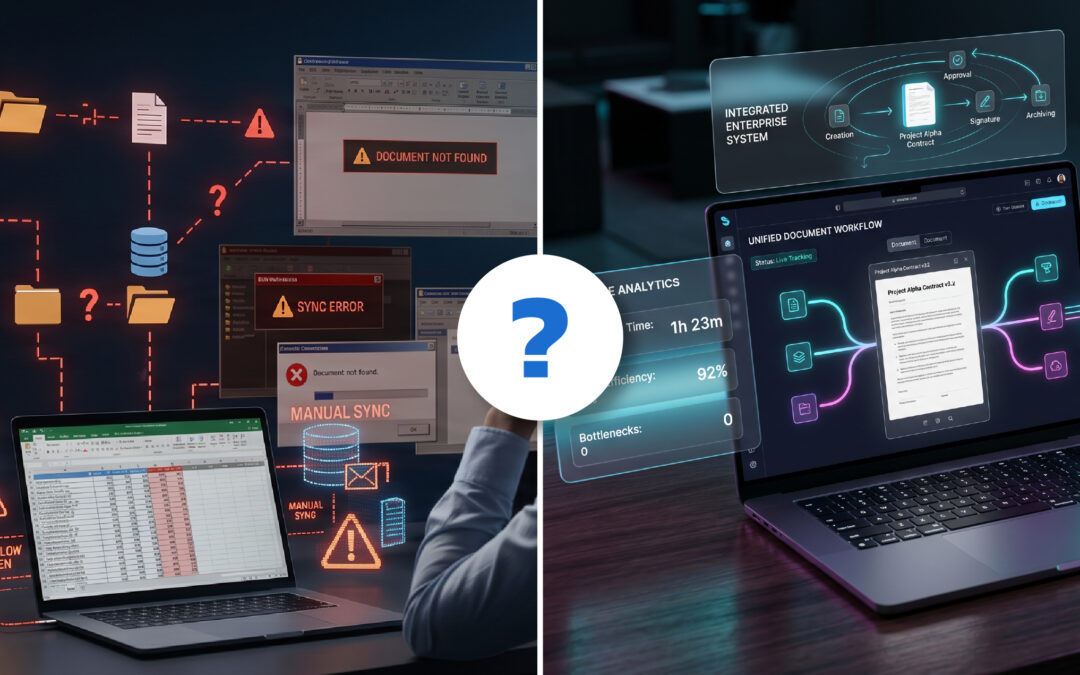
They have a composition environment upstream and production processes downstream, but the middle is held together with handoffs, custom scripts, fragile rules, spreadsheets, tribal knowledge, and extra labor. On a good day, it works. On a bad day, nobody wants to touch it.
That is why the term Enterprise Communications Processing, or ECP, has gained traction. It gives language to the operational layer between document creation and final delivery. The layer that governs post-composition processing, delivery coordination, archive handoff, cross-channel logic, tracking, and downstream integration.
That matters because the most expensive failures in print and mail do not usually start with a template problem. They start when an organization cannot reliably control what happens after the file is generated.
What a real control layer actually does
Let’s make this concrete.
A real control layer is not a glorified file mover.
It is the part of the stack that lets operations teams do things like:
-
- Ingest work from multiple upstream systems
- Normalize and prepare files for production
- Make run-time decisions without reopening core composition code
- Batch and household work for postal and production efficiency
- Re-route jobs when a device or facility is down
- Support print and digital delivery from the same communications ecosystem
- Create cleaner audit trails and operational status visibility
- Send document data and status to other platforms through APIs
- Archive communications so they can be retrieved later by customer service teams, portals, or compliance teams
This is a very different value proposition than “we help you create customer communications.”
It is closer to “we help you control, monitor, and extend communications once they are created.”
That is the stronger story, because it reflects what a real control layer actually does: it ensures visibility, flexibility, and operational oversight beyond composition.
Why post-composition matters more than most teams realize
If you work in a real enterprise environment, you already know the problem.
The business needs a change. Maybe it is a barcode, color change, hyperlink, suppression rule, page insert, repositioned address block, redaction, digital handoff, or maybe it is a quality-control enhancement. Maybe it is a fix for a legacy application nobody wants to touch.
In theory, those changes should be straightforward. In reality, they can sit in a queue for weeks because nobody wants to crack open brittle composition code or pull IT resources into what looks, from their perspective, like a “document tweak.”
That is where post-composition capabilities become strategic, not cosmetic.
With the right layer in place, operations can make controlled downstream changes to already-composed files instead of treating every update like a core application rewrite. That is a big deal in environments with aging composition systems, limited IT bandwidth, and constant pressure to move faster.
Archive is not the end of the line
A lot of vendors still talk about archive like it is a dead-end repository. Store the file. Retain the record. Move on.
That is old thinking.
Archive should be treated as part of the communications operating model. It supports retrieval, customer service, compliance, digital customers, and, when the data is properly exposed, downstream analytics and operational tooling.
This is one reason the ECP framing is so useful. It lets you talk about archive the right way: not as passive storage, but as an active part of how the business controls, retrieves, and reuses communications.
If a customer calls with a question, the archive matters. If a compliance team needs proof, the archive matters. If a client portal needs access to rendered communications, the archive matters. If CRM or service tools need to know what was sent and when, the archive matters.
And if all of that depends on manual lookups or brittle custom plumbing, the operation still has a control problem.
APIs change the story
This part gets overlooked far too often.
The goal is not just to process documents inside one system and hope everyone else can deal with it. The goal is to make communication data useful across the business.
That is where API strategy changes the conversation.
When the workflow layer can feed other tools, document status stops being trapped inside the production environment. CRMs can reflect what happened. Customer-facing portals can expose what is available. Archive systems can present the right records. Operational dashboards can show progress and exceptions. Service teams can answer questions without starting a scavenger hunt.
Now the communication is not just a finished artifact. It becomes part of the operational fabric of the business.
Where Alchem-e Fits
This is where the positioning becomes clearer.
Alchem-e is not just another piece of the stack. It is the layer that brings the stack together.
Its value shows up in orchestration, tracking, production control, integration, post-composition processing, and multichannel coordination. It connects systems that were never designed to work together and adds structure where there was none.
Batching. Tracking. Print management. API-driven integrations. Lifecycle visibility.
Individually, these capabilities solve specific problems. Together, they establish control.
Alchem-e also extends into post-composition. Racami’s PDF re-engineering capabilities are not about making documents prettier, they are operational tools. They let teams add dynamic or static data, adjust fonts and colors, insert or replace barcodes, add hyperlinks, redact content, reposition elements, apply logic, and alter completed PDFs before those jobs move downstream.
That kind of flexibility is exactly what makes post-composition valuable in the first place.
And that is the real shift, moving from managing outputs to managing the entire communication lifecycle.
The real opportunity
Most organizations do not need another disconnected tool. They need fewer blind spots. They need fewer manual handoffs. Fewer one-off fixes. Fewer workflows that fall apart when one person is out. Fewer arguments over where a job stalled. Fewer situations where archive, production, and digital delivery all tell slightly different stories.
What changes the equation is not another tool upstream. It is control over everything that happens after. That is the layer most environments are missing, and it is the one that makes everything else work.
FAQs
What is the control layer in print and mail operations?
The control layer is the operational software layer that sits between document creation and final delivery. It helps teams ingest, transform, route, batch, track, archive, and expose communications data across print and digital workflows.
Why is CCM not enough on its own?
CCM is critical for creating and composing communications, but it does not solve every downstream operational problem. Many organizations still need a separate layer to manage post-composition processing, production coordination, archive, presentment, tracking, and integration.
What does post-composition mean?
Post-composition refers to changes or processing steps that happen after a document has already been created. That can include barcode insertion, redaction, page changes, data enhancement, format adjustments, digital conversion, and other workflow steps that prepare the communication for delivery, tracking, or archive.
Why does archive belong in the ECP conversation?
Archive is not just long-term storage. In modern communications operations, archived records support customer service, compliance, portal access, reprint workflows, and cross-channel presentment. That makes archive part of the operational process, not just the end point.
How do APIs improve communications operations?
APIs let communication data move beyond the workflow engine and into CRMs, online archive portals, analytics tools, and other operational systems. That creates better visibility, faster service, and fewer status gaps.