For years, enterprise leaders viewed print and mail sourcing decisions as a simple tradeoff. Companies choose between keeping the work in-house for total control or outsourcing it to gain scale and cost efficiency.
Modern customer communications have entirely outgrown this outdated framework.
Today, complex communication environments span disconnected composition tools, print operations, inserters, postal workflows, digital delivery platforms, archives, approval processes, compliance teams, and third-party service providers. Introducing artificial intelligence into this ecosystem further shifts the priority. The sourcing conversation no longer revolves around where physical production happens. Instead, operations leaders must focus on who controls the business rules, the data, the evidence, and the ultimate customer experience.
This distinction represents the core challenge for modern enterprises. While organizations easily outsource the physical execution of their jobs, they must always retain ultimate accountability.
The Old Sourcing Question No Longer Fits the Work
The traditional debate between insourcing and outsourcing made perfect sense when organizations handled simpler customer communications. When operations relied heavily on batch print jobs, standard letters, and predictable schedules, leaders easily compared the tradeoffs. Keeping production in-house provided direct oversight. Conversely, shifting volume to external vendors delivered scale, specialized equipment, labor flexibility, and expanded capacity.
However, that static environment no longer exists.
Today, enterprise communications fluidly cross physical and digital channels. Critical jobs navigate multiple complex systems long before a document reaches the customer. Furthermore, strict business rules dictate routing based on line of business, geography, regulatory requirements, or delivery preferences. Processing a single document frequently demands data normalization, composition, suppression logic, high-speed print production, automated insertion, digital delivery, and secure archival for customer service access.
Because of this complexity, operations teams must stop asking whether they should insource or outsource. Instead, a modern communications sourcing strategy demands a different question:
What elements must the enterprise control internally, and what tasks can external partners safely execute?
Making this distinction is crucial. Regulated customer communications are far more than basic production tasks, as they introduce significant operational, financial, legal, and customer experience risks into your workflow. This reality is driving a broader corporate trend; recent Gartner supply chain research finds that roughly 70% of enterprise organizations are actively restructuring their supplier bases into hybrid models to balance operational resilience against rising production costs.
The Fragmentation Risk Inside Hybrid Sourcing Models
Many organizations actively adopt hybrid sourcing models because the theoretical benefits make perfect sense. Under this framework, internal teams retain strategy, data ownership, compliance oversight, and customer experience governance. Meanwhile, external partners handle physical production, hosting, print operations, mailing, digital execution, or specialized processing.
While this division of labor offers a smart path forward, a hybrid approach does not automatically create a mature operating model. Without deliberate orchestration, workflows fragment very quickly.
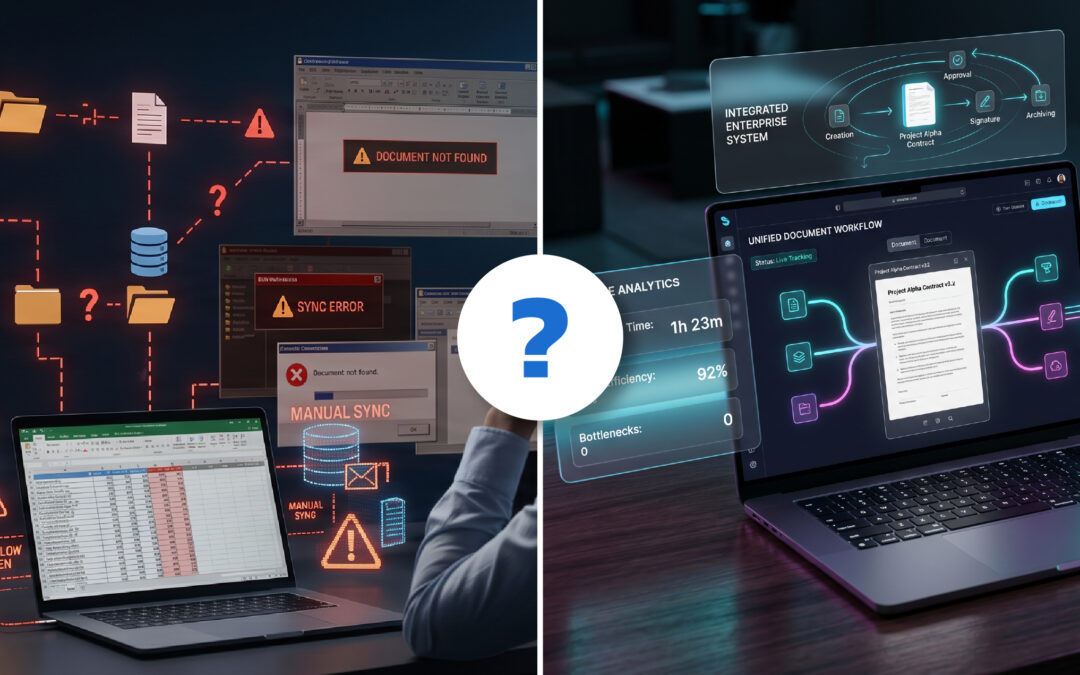
For instance, one internal team often owns the templates, while a separate division owns the underlying data. Simultaneously, an outside service provider manages physical production, a different partner handles digital delivery, and the compliance archive sits in a completely isolated repository. When operational exceptions occur, staff manage them using a messy mix of manual emails, spreadsheets, support tickets, shared drives, and tribal knowledge.
That is not a modern operating model. That is fragmentation with more participants.
The danger is that organizations think they have created flexibility when they have actually created more blind spots.
Hybrid sourcing only works when the enterprise can still answer basic operational questions:
-
- What was supposed to happen?
- What actually happened?
- Which specific system processed the communication?
- Which vendor or internal team handled each step?
- Was the document produced, inserted, mailed, suppressed, archived, or rerouted?
- What exceptions occurred?
- Can customer service retrieve the document and explain the status?
- Can your compliance team view an unbroken evidence trail?
When an operations team cannot answer these questions immediately, the underlying sourcing model is fundamentally out of control.
AI and Compliance Amplify the Need for Governance
AI is making the sourcing conversation more urgent, not less.
On the surface, AI may look like another reason to outsource. If an external partner can deploy AI-enabled capabilities faster than an internal team, it may seem logical to let that partner handle more of the process.
However, AI does not reduce the need for governance. It increases it. This urgency is reflected in broader technology spending; market research indicates that enterprise investments in AI governance and regulatory compliance platforms are skyrocketing from $2.5 billion to $3.4 billion this year alone, as complex organizations face mounting pressure to document automated logic.
If AI is used to classify communications, normalize data, identify anomalies, recommend routing, support exception handling, or assist with decision logic, organizations need to understand how that intelligence is being applied.
They need to know:
-
- What data was used?
- What rules were applied?
- What exceptions were flagged?
- What outputs were produced?
- Who reviewed the results?
- What evidence exists if the outcome is challenged?
These critical responsibilities can never live solely inside a vendor relationship. While external environments might handle the physical or digital execution, ultimate accountability always sits with the enterprise.
Industry data confirms that the Document AI market is climbing toward $27.62 billion, with the highest adoption happening in heavily regulated sectors. Organizations are feeling the critical need to automate data extraction and verification without losing compliance accuracy.
This distinction becomes especially critical in highly regulated sectors like insurance, healthcare, finance, utilities, and government. In these fields, customer communications are directly tied to mandatory notices, statements, insurance claims, policy changes, benefit eligibility, utility billing, strict compliance deadlines, and legal obligations. For these high-stakes applications, telling a regulator that “the vendor handled it” will never suffice.
Why a Traditional Procurement Approach Creates Blind Spots
Physical print and mail production carries an operational consequence that many digital-first strategy conversations completely underestimate. Even when systems compose a document perfectly, downstream errors can still disrupt delivery. For instance, a production system might batch a file incorrectly, or an automated inserter might miss a printed page. Similarly, an operator might successfully insert a document but fail to generate the scan history needed to resolve a future customer inquiry. Ultimately, the postal service may mail the piece, but the originating organization will still lack easy access to the historical data proving the exact production path that the document followed.
These technical gaps quickly translate into severe business problems. According to the Cisco Consumer Privacy Survey, upwards of 90% of consumers express intense concern regarding how corporate systems handle their data privacy. Failing to accurately capture and honor strict channel preferences, like print-to-digital opt-outs, or failing to track physical mail pieces through automated insertion creates immense regulatory and reputational liabilities:
-
Customer Service Bottlenecks: Frontline agents cannot confidently answer direct delivery status questions.
- Compliance Vulnerabilities: Audit teams struggle to reconstruct what happened during a critical production run.
- Wasted Operational Hours: Internal teams spend days chasing down tracking details across fragmented systems, vendors, and departments.
- Eroding Business Trust: Internal business units lose faith in the workflow because they cannot easily see where their work stands.
- Uninformed Executive Decisions: Leadership teams make high-level sourcing choices without a complete, data-driven view of true operational performance.
When a customer calls, a regulator demands proof, or an internal business unit questions why a critical communication faced delays, stating that “we sent the file to production” is no longer enough. The bottom-line risk is stark; consumer metrics published by Quadient reveal that 20% of buyers will abandon a provider completely due to poor or fragmented customer communications, a churn rate that rises to 25% among younger demographics.
Modern enterprise operations require deep visibility at the job, document, and individual-piece level. Securing this control demands an airtight print-and-mail audit trail, instant searchable access to the final communication, and a proactive way to catch exceptions before they escalate into customer-facing failures. To protect their compliance and customer experience, organizations require a centralized operational control layer.
Core Capabilities Your Operational Control Layer Must Provide
A successful hybrid communications model requires far more than basic vendor contracts and service-level agreements
The massive shift toward centralized software layers is evident in recent market data, which tracks the enterprise document automation sector climbing toward a $20.5 billion valuation. Crucially, over 61% of these investments are flowing into cloud SaaS frameworks as organizations actively move away from legacy operational silos.
Deploying an operational control layer equips organizations with the tools to:
-
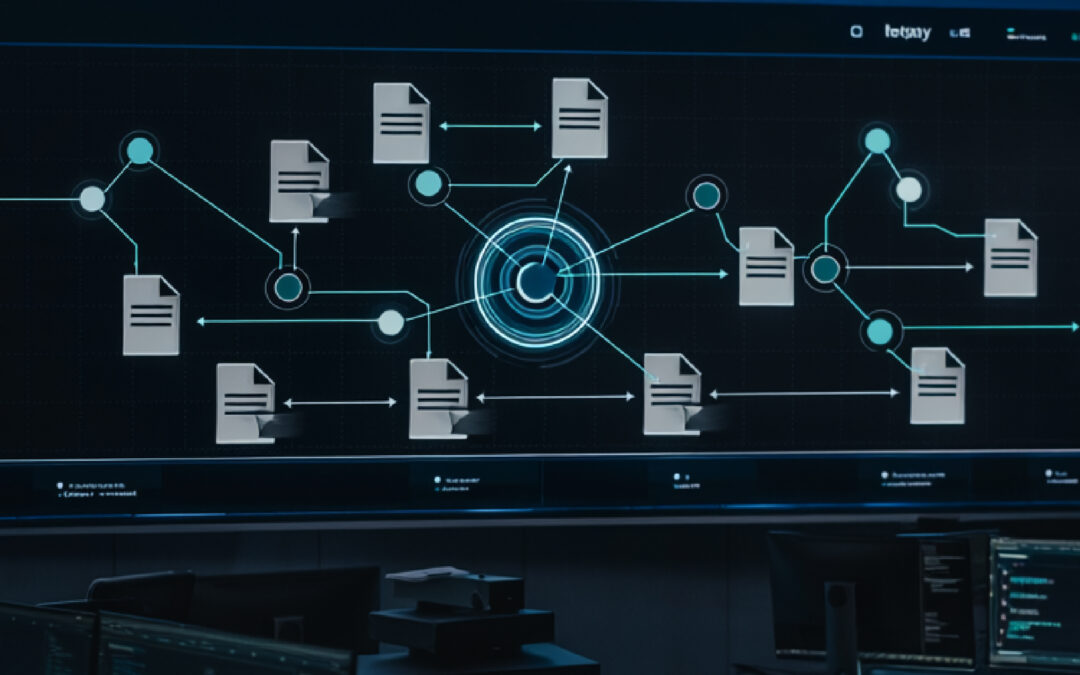
- Orchestrate workflows across systems, vendors, and production environments
- Track jobs, documents, and individual mail pieces through the production lifecycle
- Apply corporate business rules and routing logic consistently across all distribution channels
- Monitor processing exceptions and equipment status in real time to catch errors early
- Preserve audit trails across internal and external handoffs
- Retrieve documents through a searchable archive
- Empower customer service agents with rapid access to historical communication records
- Provide operations leaders with deep, data-driven visibility into production throughput, workflow bottlenecks, and vendor performance
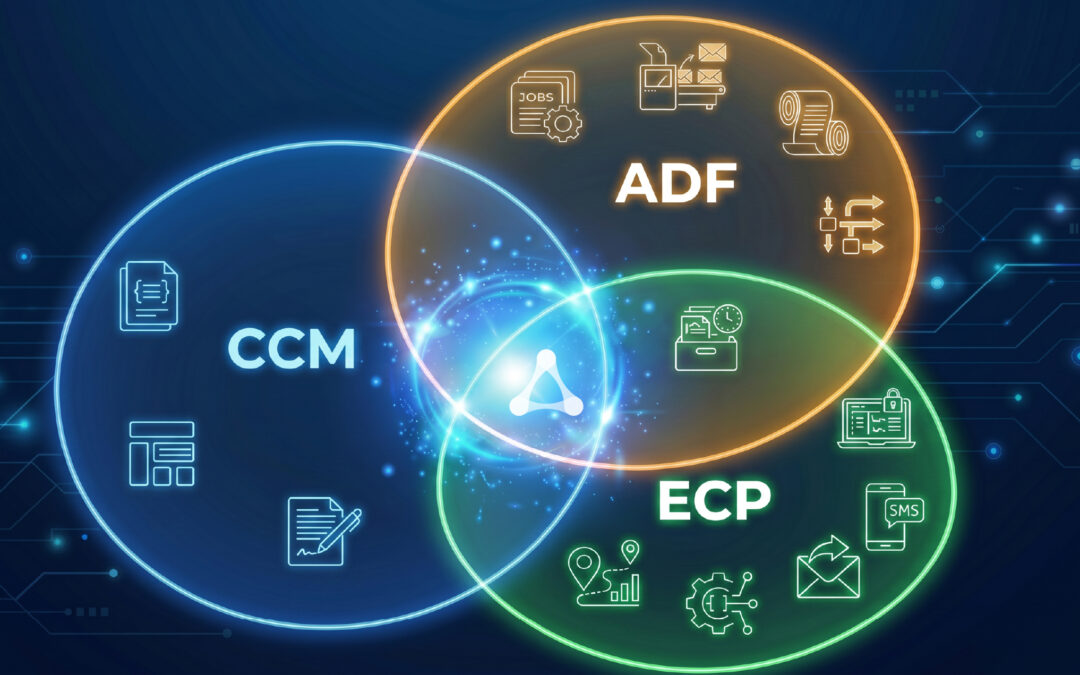
- Connect print, mail, archive, and digital delivery workflows without forcing every system into one vendor stack
The point is not to bring every activity back in-house. The point is to keep control of the operating model, even when execution is distributed. That is the difference between mature hybrid sourcing and fragmented outsourcing.
The Future of Sourcing Demands Controlled Execution
The future of communications sourcing is no longer about choosing between insourcing and outsourcing. True operational success hinges on designing a model that keeps core pillars, like business rules, workflow visibility, and compliance, under enterprise control. Execution can safely happen across internal print shops, external service bureaus, or digital delivery partners, but ultimate corporate accountability cannot be scattered.
This requirement is precisely why organizations are moving away from basic procurement tactics and adopting orchestration platforms like Racami’s Alchem-e. Rather than forcing a choice between full insourcing or blind outsourcing, this architecture introduces a centralized control layer. It provides the technological foundation to orchestrate post-composition workflows, manage real-time exceptions, and track delivery down to the individual mail piece level, no matter how many vendors touch the job.
Consider the typical lifecycle of a regulated customer communication. Transaction data must navigate data formatting and ETL processes, regional printing, automated envelope insertion, and compliance archiving. Without a unified control layer, every handoff between these disconnected systems and external vendors creates a dangerous blind spot.
Utilizing an orchestration foundation like Alchem-e solves this fragmentation by ensuring an unbroken trail of production evidence and providing customer service teams instant
As your physical print, mail, and digital workflows grow more distributed, your underlying control framework must mature alongside them. Racami helps enterprises establish the centralized orchestration, piece-level tracking, compliance archiving, and operational visibility required to master complex customer communications across internal teams, external service partners, and diverse delivery channels.
Talk to Racami about building a stronger operational control layer for your customer communications.
FAQs
Why is the traditional sourcing debate between insourcing and outsourcing outdated?
Because modern communication environments cross too many disconnected physical and digital channels for a simple “where to print” decision to suffice; instead, operations leaders must focus on who controls the underlying business rules, data, and evidence.
What is the primary risk of adopting a hybrid sourcing model without orchestration?
Workflows fragment very quickly across isolated vendor systems and internal departments, creating dangerous blind spots where teams cannot verify document statuses, answer customer service inquiries, or track processing exceptions.
Why does implementing AI make corporate governance more urgent?
AI significantly accelerates data processing and extraction, but it also increases compliance risks by requiring complex organizations to clearly document exactly what automated logic was applied and what data was used to pass rigorous audits.
How does a traditional procurement approach create compliance vulnerabilities?
Relying solely on disconnected physical production runs or isolated vendor status reports leaves audit teams without a single, unbroken trail of piece-level evidence proving the exact tracking history a regulated document followed.
How does Alchem-e help organizations establish controlled execution?
Alchem-e introduces a centralized operational control layer that sits on top of your existing infrastructure, allowing you to orchestrate workflows, manage exceptions, and secure piece-level tracking across all internal teams and external service partners.